How to Keep Your Horse Comfortable in Their Stable Year-Round
Find out how to keep your horse's stable comfortable throughout the year, from ventilation and bedding to managing warmer and colder weather.
How do you keep horses comfortable in their stables through the seasons?
To keep your horse comfortable year-round, make sure their stable has plenty of fresh air, clean and dry bedding, enough room to move around and protection from the weather.
Stable comfort checklist
A comfortable stable should provide your horse with:
- Enough space for your horse to move comfortably
- Plenty of fresh air without strong draughts
- Clean, dry bedding
- Fresh water
- Natural light
- Safe doors and fittings
- A dry, non-slip floor
- Protection from the weather
- A clean environment that's regularly maintained.
Your horse should have enough room to turn around, lie down and get up comfortably. Read our guide to choosing the right stable size for more advice.
How do you keep a stable cool in summer?
Warm weather can make wooden stables feel stuffy quickly, so good ventilation is important. It allows warm air to escape and fresh air to move through the building.
Good airflow lets warm air escape and allows fresh air to move through the building. Features such as top doors, talk grilles and rear windows can help.
The position of the stable can make a difference too. A stable that's shaded from the strongest afternoon sun may stay cooler during warmer weather.
Make sure your horse always has access to plenty of fresh water and check on them regularly when the weather is hot.
How do you keep a stable comfortable in winter?
During cold, wet weather, the aim is to keep your horse dry and protected from the elements while still maintaining good ventilation.
Try to avoid strong draughts blowing directly across your horse, especially around their bedding.
At the same time, don't close the stable up completely. Keep top doors, vents and other high-level openings clear so fresh air can continue to circulate.
Dry bedding is especially important, as it gives your horse a comfortable place to stand and lie down.
What is the best bedding for horses?
Straw, wood shavings and wood pellets are all popular options. The best choice will depend on your horse, your budget and how you manage the stable.
Whichever you choose, keep the bedding clean and dry and remove wet or heavily soiled areas regularly.
How can you keep the area around your stable dry?
Wet, churned-up ground around stable entrances can become slippery and uncomfortable for horses to walk across.
Keep an eye on high-traffic areas during wetter months and deal with mud before it becomes a bigger problem. Adding hardstanding or suitable matting around entrances can give horses a firmer surface when they're moving in and out of the stable.
For more advice on managing moisture, read our guide to preventing mould and damp in horse stables.
What stable features can improve horse comfort?
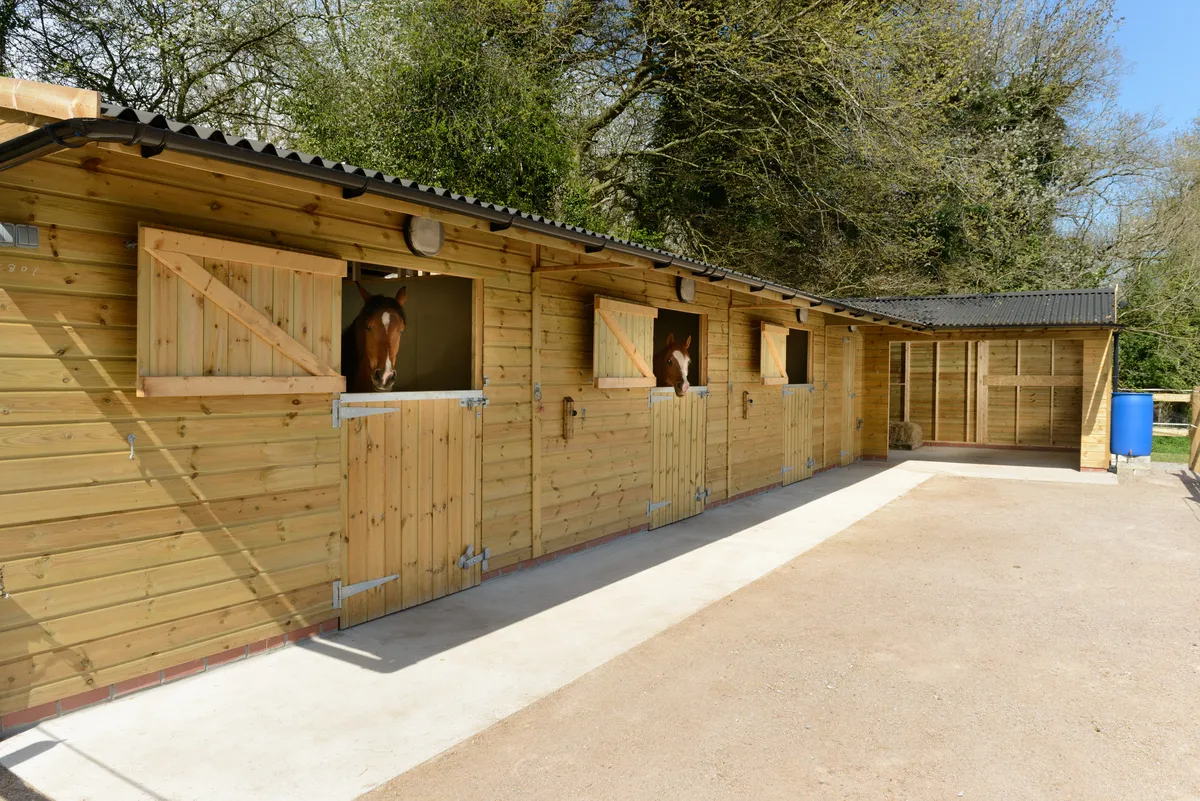
Top doors, windows and vents help fresh air move through the stable and allow warmer air to escape.
Talk grilles allow horses in neighbouring boxes to see and interact with each other while keeping them safely separated.
Clear roof sheets can bring more natural light into the stable during the day.
Roof overhangs provide extra protection around stable entrances from rain.
Kickboards provide a strong internal surface where horses are likely to kick, lean or rub against the walls.
Think about these features when you're planning your stable rather than automatically adding every available option. The right choices will depend on your horses, the position of the building and how you use your yard.
For more help planning your building, read our guide to horse stable design.
How do you keep a stable comfortable day to day?
A few simple jobs to keep on top of include:
- Remove wet and dirty bedding regularly
- Keep your horse's water clean and fresh
- Keep vents, windows and other ventilation openings clear
- Check doors, bolts and fittings for damage
- Check the floor and bedding for wet or slippery areas
- Keep the entrance clear and safe
- Check your horse regularly and adjust their management as the weather changes.
If you notice condensation, persistent damp or a musty smell, check where the moisture is coming from and deal with the cause before it gets worse.
Design comfortable timber stables with Colt
Colt timber stables can be adapted with additional windows, vents and rear top doors if you need more airflow or natural light. Talk grilles are another option if you want horses in neighbouring boxes to be able to see each other.
Our team can help you choose a size, layout and options that work for your horses and the way you manage your yard.
Explore our timber stables, mobile stables and mobile field shelters.
Frequently Asked Questions
How long should a horse spend in a stable?
This will depend on the individual horse, its routine and access to turnout. Horses need regular opportunities to move around, exercise and interact with other horses.
Do horses get cold in stables?
Horses can generally cope well with colder temperatures when they're healthy, dry and protected from harsh weather. Their individual needs will vary depending on factors such as age, breed, condition and whether they're clipped.
Should you close stable doors at night?
This will depend on the weather, your stable design and your horse. Whatever setup you use, make sure the stable remains well ventilated and your horse is safely contained.
How can you tell if a horse is too hot in its stable?
Signs can include excessive sweating, faster breathing and lethargy. Move your horse somewhere cooler, offer fresh water and contact your vet if you're concerned.
Should horses be able to see each other from their stables?
Horses are social animals, so being able to see and interact with other horses can be beneficial. Features such as talk grilles can allow contact between horses in neighbouring boxes.
Do horses need bedding if they have rubber mats?
Rubber mats provide a cushioned surface but don't necessarily replace bedding. Bedding can absorb urine and provide a dry, comfortable area for your horse to lie down.