Stable Design: How to Plan a Practical, Comfortable Stable Block
Planning a new stable block? Find out what makes a good stable design, including the right size, layout, ventilation, positioning and materials for your horses and yard.
What makes a good stable design?
A good stable design gives horses enough room to move comfortably, plenty of fresh air and natural light, while making everyday jobs around the yard as easy as possible.
Stable design checklist
- Enough space for the horse to move, lie down and get up comfortably
- Good ventilation without draughts
- Plenty of natural light
- Safe, hard-wearing materials
- Secure doors and fittings
- Good drainage
- Easy access to turnout
- Practical routes for feed, bedding and mucking out
- Suitable storage
- A layout that works for the number of horses you have.
Getting these basics right from the start can make your stable block safer and easier to manage for years to come.
Where should you position a stable block?
Choose a quiet part of the yard away from busy roads, machinery and regular deliveries where possible. Avoid low-lying ground that's likely to become wet or muddy.
Think about how you'll get horses between the stables and turnout, too. Keeping the stable block reasonably close to your fields can make everyday jobs quicker and easier.
Make sure there's also enough space around the building for horses, people and vehicles to move around safely.
How much space does a horse need in a stable?
As a general guide, a 12ft x 12ft (3.6m x 3.6m) stable is suitable for most horses up to around 17hh. Larger horses, foaling mares and horses that spend more time stabled will benefit from a larger 12ft x 14ft stable or more.
The right stable size will depend on your horse's height and build, as well as how much time it spends inside. Your horse should have enough room to stretch its neck, turn around and lie down and get up comfortably without feeling restricted.
It’s also worth thinking beyond the space your horse needs. A roomy stable makes everyday jobs like mucking out much easier because it gives you space to move a barrow, lift bedding and work without feeling cramped.
For more information about stable size, read this article.
If you're not sure what you need, our team can advise on the best dimensions for your horse and yard.
How much ventilation does a stable need?
Good ventilation helps keep the stable fresh and comfortable. Fresh air keeps the boxes dry, reduces smells and prevents warm, stale air from building up.
Try to maintain a steady flow of fresh air without creating uncomfortable draughts around your horses. Vents, windows and well-positioned doors can help air move through the block.
It's worth thinking about ventilation from the start, especially when deciding where to put doors, windows and vents.
Which stable block layout should you choose?
The best layout depends on the number of horses you have, the space available and how you use your yard.
Straight stable blocks
A straight run of boxes is a simple option that works well for smaller yards. It keeps everything together and makes it easy to move between stables.
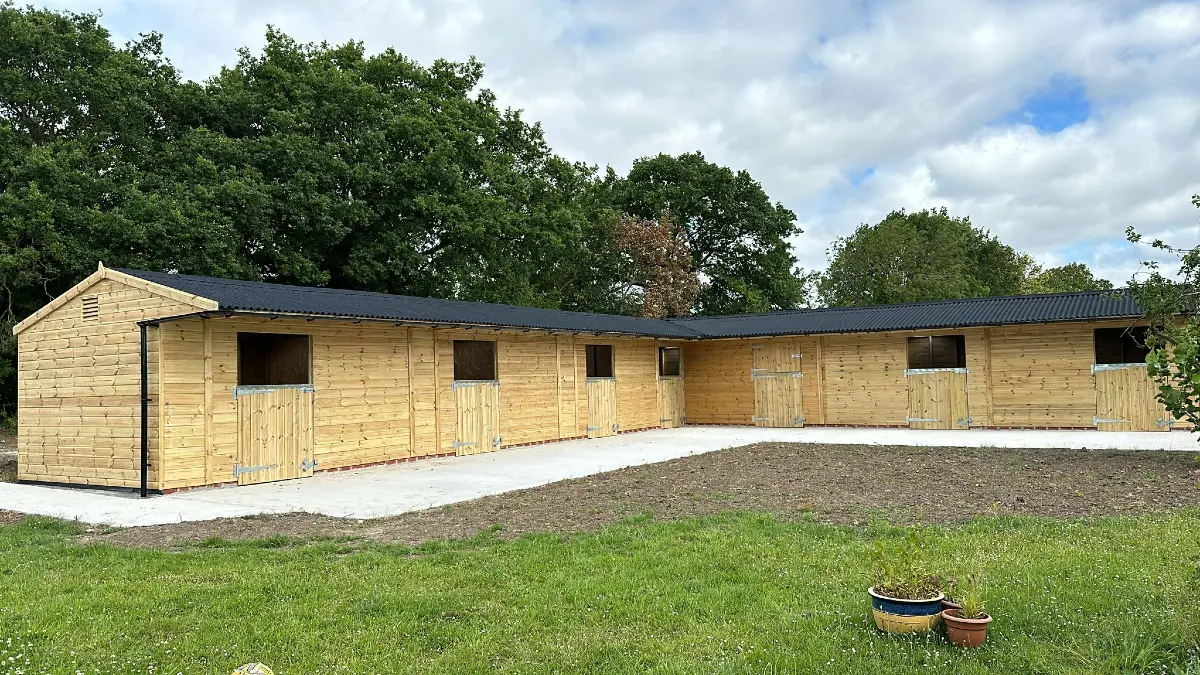
L-shaped stable blocks
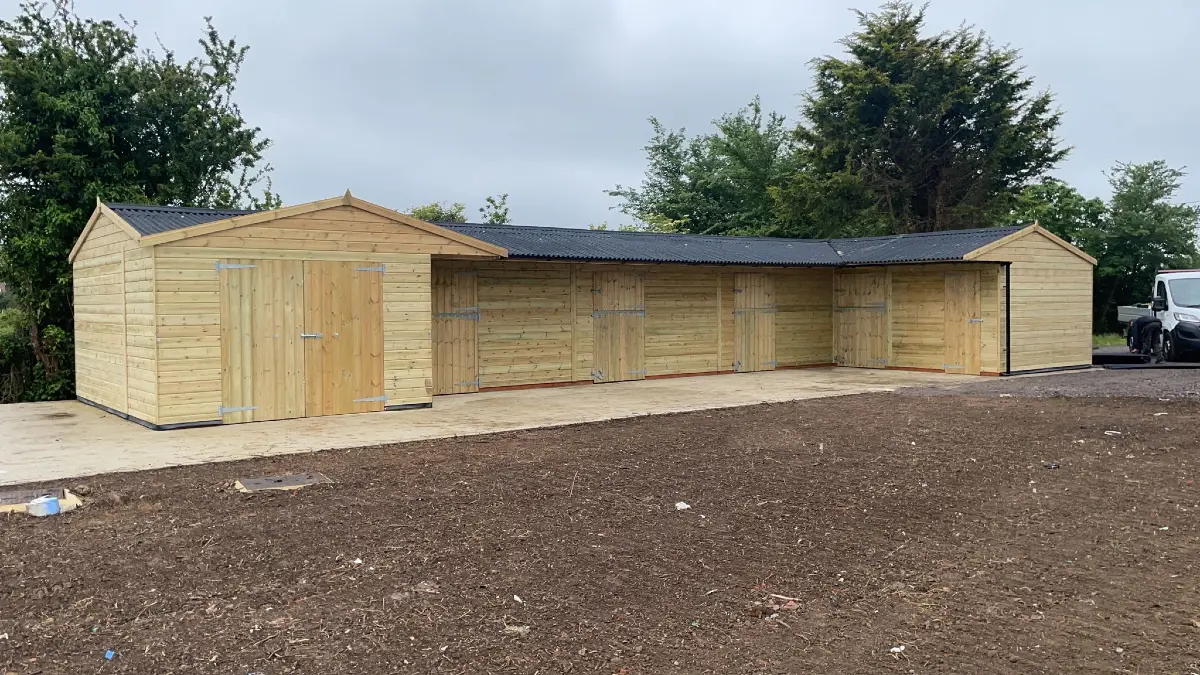
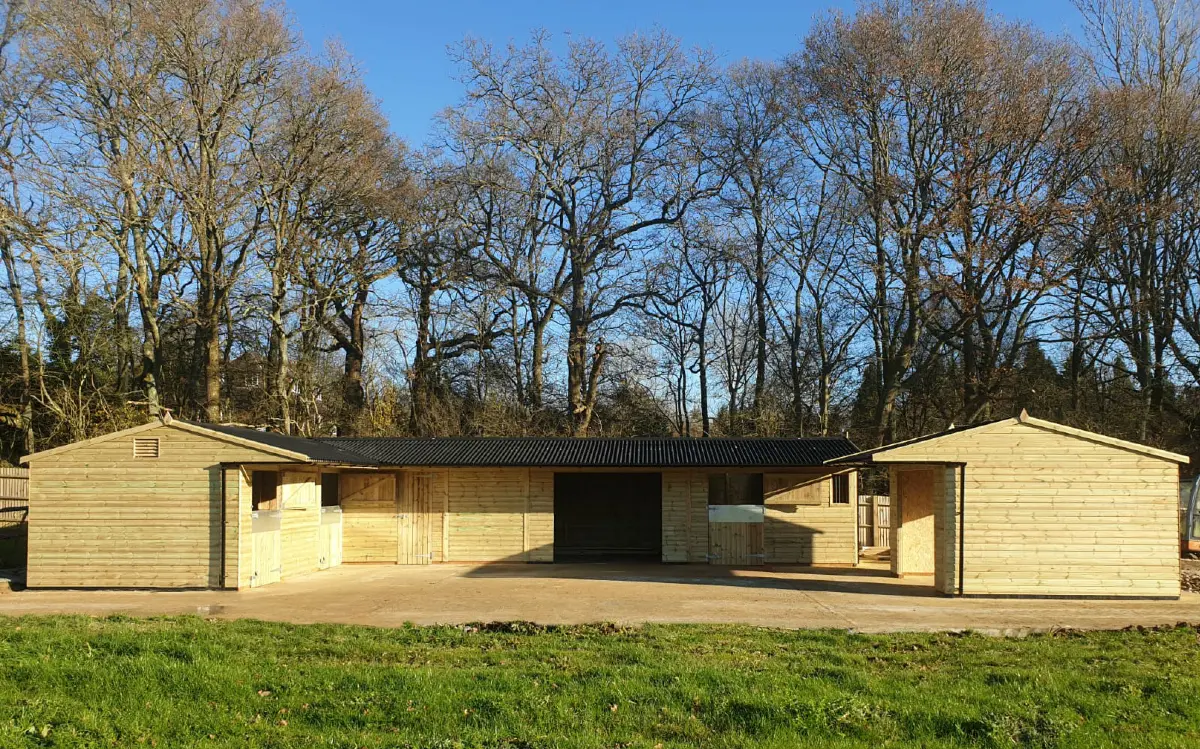
An L-shaped layout works well if you need more boxes or want to include spaces such as a tack room, feed room or hay store. It can also help create a more sheltered yard area.
U-shaped stable blocks
For larger yards, a U-shaped block brings stables, storage and other facilities together around a central area, helping keep everyday jobs in one place.
Choose safe, hard-wearing materials
The materials you choose have a big impact on how safe a stable feels for the horses.
Solid framing and quality cladding stand up to knocks, rubbing, and everyday wear, while smooth finishes and rounded edges help prevent accidental scrapes or catches.
Kickboards are especially useful: they protect the walls and give horses something sturdy to lean or brush against.
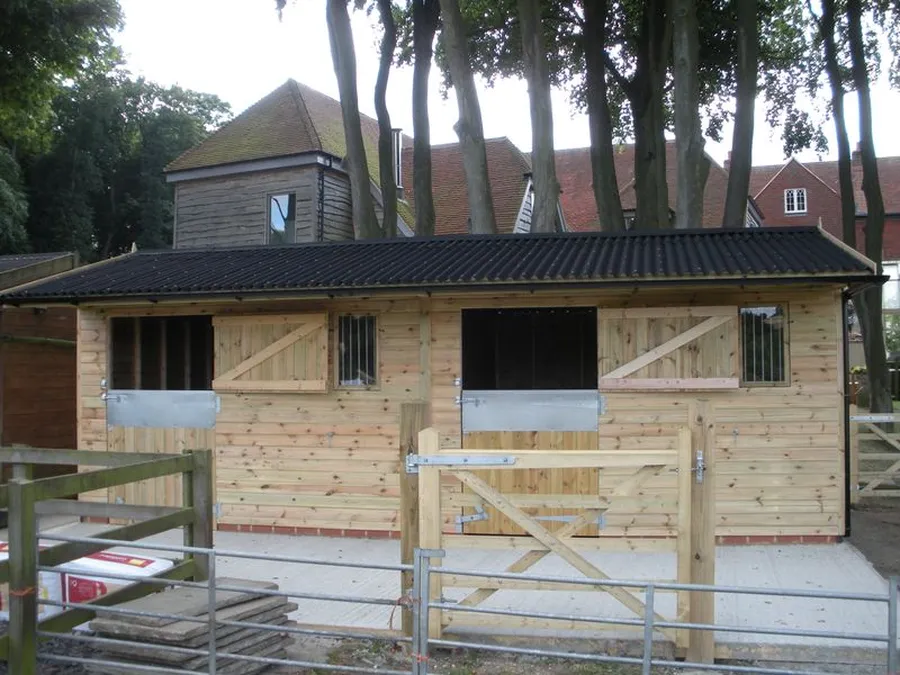
A well-built roof made from lightweight materials like Onduline keeps the interior dry and softens the sound of heavy rain, helping the space stay quiet.
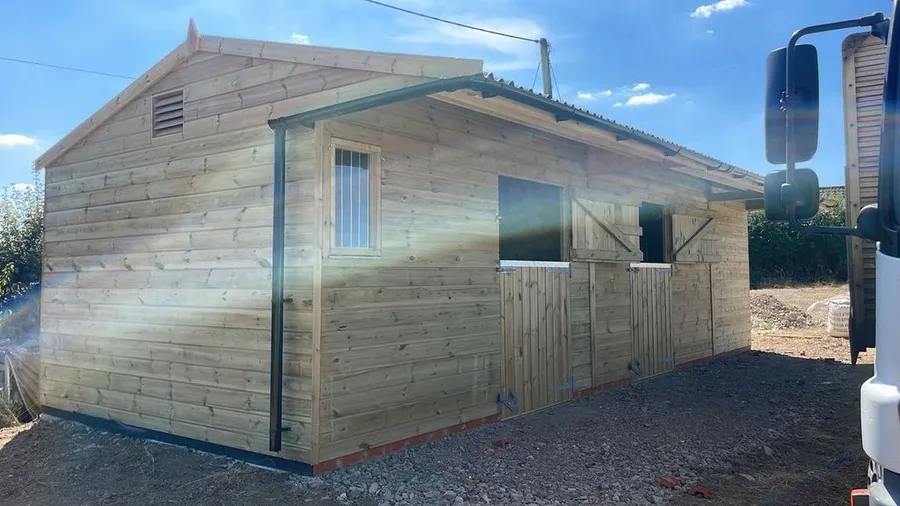
Overhangs and guttering stop water from running down entrances, reducing slippery patches and keeping bedding fresher for longer.
Secure, level flooring with good drainage and comfortable bedding helps horses rest more comfortably and protects their joints.
Features like anti-chew strips, secure bolts, and metal-barred windows reduce the risk of mouth injuries, knocks, and escapes.
Make sure doors and fittings are safe
Stable doors should be easy to open and close, with bolts and latches you can reach easily when handling a horse.
Check that hinges, bolts and other metalwork don't stick out where they could catch a horse, rug or headcollar. Doors should also be wide enough for horses to pass through comfortably.
Keep the area immediately outside each stable clear so you have plenty of room when leading horses in and out.
Design your timber stables with Colt Stables
Colt stable blocks are built with many of the practical features we've covered in this guide.
We use strong 75mm × 50mm timber framing, pressure-treated shiplap cladding and OSB kickboards, along with secure doors and anti-chew strips.
Each stable block also comes with a 1.2m front canopy and guttering, with options including additional windows, vents and partitions depending on your layout and horses.
Whether you're planning a single stable or a larger block, our team can help you choose the right size, layout and options for your yard.
Discover Colt's full range of stables, mobile stables and mobile field shelters.
Frequently asked questions
What is the best shape for a stable block?
There isn't one layout that's best for every yard. Straight blocks work well for smaller setups, while L-shaped and U-shaped blocks can give you more space for extra stables, storage and other facilities.
What should you put on a stable floor?
Your stable floor should be level, non-slip and easy to clean, with good drainage to help keep it dry. You can also add rubber mats and bedding to make it more comfortable for your horse.
How much natural light does a horse stable need?
A stable should have plenty of natural light while still giving your horse shelter from the weather. Windows, top doors and clear roof sheets can all help bring more daylight into the stable.
What should you include in a stable block?
As well as the stable boxes themselves, you may want space for feed, tack, hay, bedding and equipment. Larger yards can also include facilities such as wash bays, depending on how you use the yard and the space available.