How to Start a Livery Business
Thinking about starting a livery yard? Find out what you need to consider, including service level, facilities, planning, costs, insurance and contracts.
How to Start a Livery Business
To start a livery business, you'll need suitable land, stables, grazing, storage and areas for feeding and caring for the horses, as well as the right planning permission, insurance and contracts in place.
If you have suitable land available, setting up a livery yard can be a good way to generate extra income. In this article, we look at what you need to consider before getting started.
What is a livery yard?
A livery yard is a place where horse owners pay to keep their horses and use the facilities provided.
What's included depends on the type of livery you offer. This can range from providing grazing and facilities to taking care of the horse each day.
What type of livery will you offer?
Your first decision is how much of the horse's day-to-day care you want to provide.
DIY livery
The horse owner takes care of most of their horse's day-to-day needs, while you provide facilities such as a stabling, grazing and access to the yard.
Part livery
The yard takes care of some daily jobs, while the owner handles the rest. What's included varies from yard to yard.
Full livery
The yard takes care of most daily jobs, including feeding, turnout and mucking out. You'll need more staff time to offer this level of service.
Grass livery
Horses live outdoors, rather than in stables. You can also provide grazing or additional care as part of the service.
Make sure you have the right experience
If you're going to make a success of your livery business, it's important that you have plenty of experience working with horses.
Many people underestimate the amount of work involved in running a yard. You'll be dealing with horses with different needs, owners with different expectations and many day-to-day jobs that need doing regardless of the weather.
You don’t necessarily need qualifications, but training in areas like stable management and horse care can help build your knowledge and give potential customers more confidence.
Think about whether you have enough experience to run the yard yourself. If not, you may need to employ someone who can help you.
Is there demand for another livery yard?
Before you set up your livery yard, find out whether there's enough demand in your area.
Are there enough local horse owners who need the services you can provide? Are there other livery yards nearby, and is there a gap in the market that your new yard could fill? Look at what other yards offer, what they charge and whether they're full.
It can also be useful to speak to owners about what they struggle to find; for example, good turnout, an arena, hacking, storage or a particular type of livery.
Plan your stables and facilities
Before you start, ask yourself:
- How many stable units do I need to meet initial demand?
- Do I have enough space to grow the business over time?
- Can I provide good security for horses and tack?
- Is there somewhere to store hay, feed and bedding?
- Is there easy access to water?
- Do I need to install additional fencing?
- Are there good bridleways nearby?
- Can I provide on-site parking?
- Will I need toilets or other facilities?
- Is there enough turnout for the number of horses I plan to take?
Think about how you'll use the yard every day, too. Keeping hay and feed close to the stables, making room for vehicles and planning an easy route for muck removal can save you a lot of time.
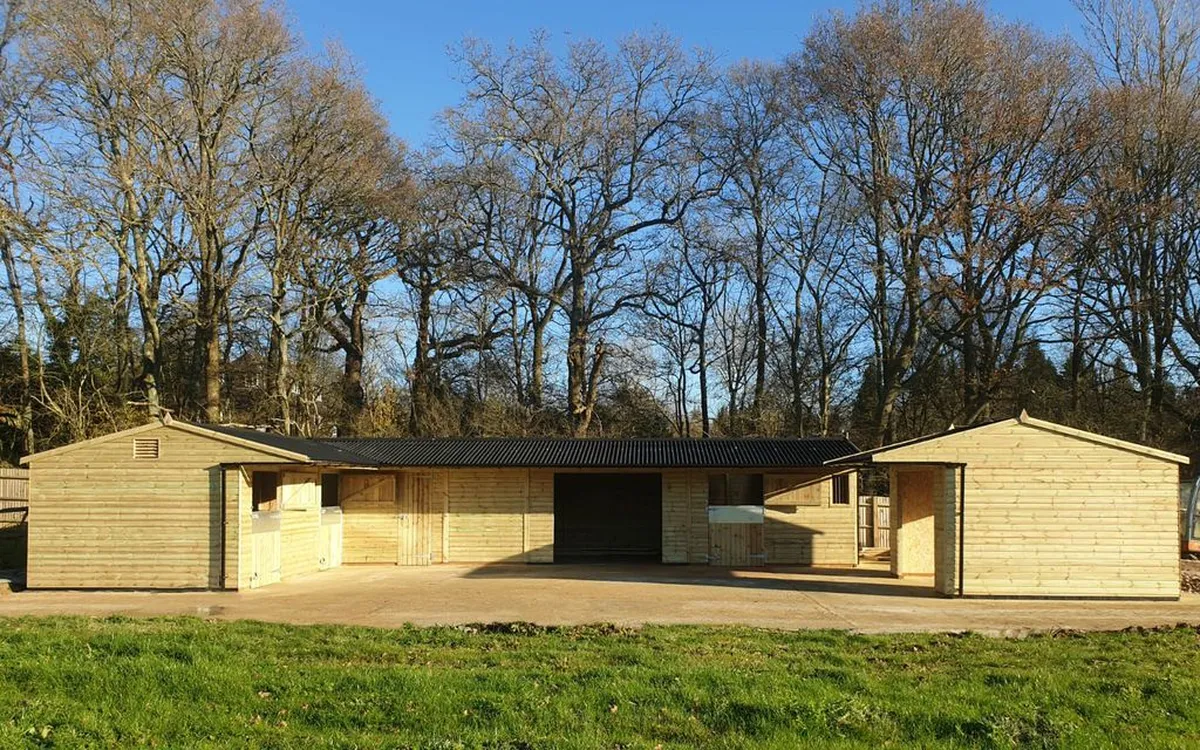
If you plan to expand later, make sure your initial layout leaves enough room to add more stables or facilities without having to completely rethink the yard.
Check planning permission and other requirements
Check whether you need planning permission before you spend money on your new livery yard. The rules will depend on your land, how you plan to use it and what you want to build, so speak to your local planning authority before you start.
If you're planning to offer riding lessons or hire horses out for riding, you'll also need to check the licensing rules with your local authority.
Work out your start-up and running costs
Setting up a livery yard can be costly, so work out your budget before you start investing in it.
Your initial costs might include:
- Stables and other buildings
- Groundworks and drainage
- Fencing and gates
- Water and electricity
- Storage
- Parking and access
- Security
- Yard equipment
- Planning and professional fees.
You'll also need to think about ongoing overheads like business rates, where applicable, insurance, general maintenance, staff costs and utilities, and unexpected expenses.
Depending on the type of livery you offer, you might also need to account for water, hay, bedding and feed. Working out these costs will help you understand how much income the yard needs to generate.
Decide what you'll charge
Before setting your prices, work out what each livery space actually costs you to provide.
Your prices need to cover your running costs while leaving enough room for the business to make a profit. The amount you can charge will also depend on your location, facilities and the level of service you provide.
Look at other yards in your area to see what they charge for DIY, part, full and grass livery, but don't base your prices on competitors alone. A yard offering an arena, plenty of turnout, good hacking and additional services may have very different costs from a basic DIY setup.
Make it clear what's included in your price, too. This will make it easier for potential customers to compare your yard with others and helps avoid disagreements later.
Put a livery contract in place
Because you're accepting payment for providing a service, it's important to have a clear written agreement with your customers.
Your livery contract should spell out exactly what's included in the service and what the horse owner remains responsible for.
Depending on your setup, this could cover:
- Livery fees and when they're due
- Services included
- Feed, hay and bedding
- Turnout arrangements
- Veterinary and emergency arrangements
- Use of facilities
- Yard rules
- Notice periods
- What happens if fees aren't paid.
People can understandably be very protective of their horses, so making responsibilities clear from the beginning can help avoid misunderstandings later.
For the agreement itself, it's worth getting legal advice rather than using a standard template.
Get the right business insurance
You'll need insurance that covers the way you run your livery yard. Depending on the services you offer, this may include public liability and cover for horses you’re looking after.
If you employ staff, you'll usually need employers' liability insurance too.
It's worth speaking to an insurer or broker who understands equestrian businesses, especially if you plan to offer extra services like riding lessons.
Build your livery yard with Colt Stables
Starting a livery yard can be challenging, but with the right planning it can also be an extremely rewarding way to turn your land and love for horses into a business.
The right stable setup will depend on how many horses you plan to accommodate, the type of livery you offer and whether you expect the yard to grow over time.
At Colt Stables, we can help you plan a stable setup that works for your land and your budget, whether you're starting with a small number of boxes or planning a larger livery yard.
Take a look at our timber stables and mobile stables, or contact the Colt Stables team to talk through your requirements.
Frequently asked questions
Do you need a licence to run a livery yard?
It depends on the services you offer and where you're based. If you plan to hire horses out for riding or offer riding lessons, check the licensing rules with your local authority before you start.
Do you need qualifications to run a livery yard?
You don't necessarily need qualifications to run a livery yard, but good horse-care knowledge and practical experience are important. Training and qualifications can also help give customers confidence in your yard.
Is a livery yard profitable?
A livery yard can be profitable if there's enough demand and you price your services properly. Make sure you understand your costs, including staff, feed, bedding, maintenance and utilities, before deciding what to charge.
What facilities does a livery yard need?
This depends on the type of livery you offer, but you'll usually need suitable stables or grazing, secure fencing, fresh water and somewhere to store feed, hay and equipment. Parking, good hacking and an arena can also make your yard more appealing to customers.